


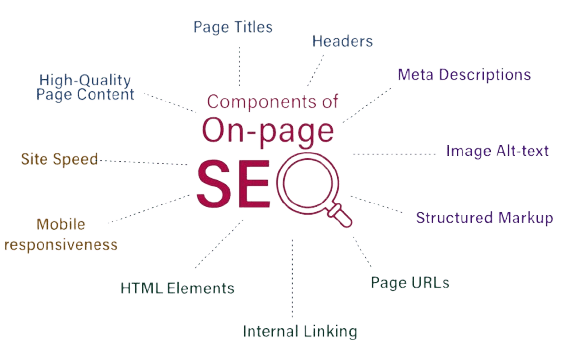
If you want your website to rank well on Google and attract more visitors, you must implement the best practices outlined in the SEO starter guide. on-page SEO is one of the most important things you can focus on. On Page SEO is the process that you do on your own website to enhance the ranking of your website in the search engines. This includes your content optimization and updating, the use of keywords contained in your articles that help increase your website ranking on the result page.
Improving On page SEO strategies, Intent and Target Keyword Research
How to Define User Intent for Improved and Target SEO Ranking
But when you begin changing the look of your website, make sure you know what consumers are looking for particularly focusing on image search. This is called It is critical to realize the user intent to achieve the best of keyword research tools and SEO approaches recommended above. User intent merely refers to why a person is searching for particular item or service.For example, a person who types in “how to enhance on page SEO” wants to know how to make things improved on his/her site. Analyzing user intent means that he or she is likely to provide answers to the users’ questions and ranking higher within the result page.
Looking at the example below, it is now easy to identify the primary, secondary, and long-tail keywords based on the On Page SEO.
You have to make sure that your content gets to the right audience as this is a part of on page SEO keywords. Keywords are phrases people use at Google in order to look for something. When employing SEO tools for keyword research there are three types of keywords that you ought to consider.
Primary, Secondary, and Long-Tail Keywords for On Page SEO

Target Keywords These are the primary keywords you want to target in your SEO campaigns such as “how to optimize on page SEO” and improve off-SEO page, including the keyword for on page SEO to achieve better search engine results page ranking.
Secondary Keywords: They are related terms including ‘Search engine optimization techniques’ or ‘Web site optimization’.
Long-Tail Keywords: These are longer and more informative some of which are, ‘best practices for enhancing the discoverability of eCommerce websites’.
Strategies for Identifying Keywords That Help the Page Rank
There are free keywords for your website, which can be searched on Google search or through the site’s audit. The best thing to do is use google keyword planner to search for keywords for the on- page SEO template, Ubersuggest is another tool which can be used to improve their search engine rank, By creating an all inclusive on- page SEO template, all the necessary aspects will be optimized.Answer the Public. Below are some tools that will give you all the information that you need in concerning what people seek in website, and the competition level of a particular keyword. When selecting keywords ensure that they are ones that are related to your content and have a good number of hits (implied from the hits).
Content Quality and Structure
Writing High-Quality Content that Ranks and Engages
One of the most important factors in On page SEO is having a well optimize structured layout for each specific page. High Quality content is content that answers the questions your audience is asking. It should be well-written, informative, & helpful for users. Make sure your content is:
Target Keywords These are the primary keywords you want to target in your SEO campaigns such as “how to optimize On page SEO” and improve off-SEO page, including the keyword for On page SEO to achieve better search engine results page ranking.
Clear and easy to read
Free of spelling and grammar mistakes
Valuable and informative, offering real solutions to problems
How to Structure Your Content for Readability and SEO
How you structure your content matters just as much as what you write, especially when following an On page SEO template. Search engines like Google look at how your content is organized to understand what it’s about. A good structure also makes it easier for users to read your content. Here are some tips for structuring your content to improve SEO: use keywords strategically and avoid keyword stuffing.
Use headings (H2, H3) to break up your content into sections.
Write Short paragraphs improve readability and can help you rank higher in search results. Creating content that is easy to read is essential for effective digital marketing.
Use bullet points or numbered lists Use numbered lists for key points to enhance readability and improve your search rankings.
Creating Engaging, Multimedia Content: Images, Videos, and Infographics
Adding Optimize images on your site to enhance user experience and improve your SEO, videos, and infographics to your content makes it more engaging and can help keep visitors on your page longer. Google rewards sites that keep visitors engaged, so adding media, like optimized images, is a great way to improving On page SEO.
Make sure your images are optimized by using descriptive filenames and alt text (short descriptions that tell search engines what the image is about, which can also include your target keyword). This helps Google understand the content of your page even better.
Technical On Page SEO Essentials
Mastering Meta Tags: Titles, Descriptions, and Best Practices
Meta tags are pieces of text describing your page to search engines.:
Title Tag: This is the title of your webpage, and it appears in the search results. Make sure your title is clear, relevant, and includes your One essential aspect of SEO basics is identifying your primary keyword for each specific page..
Meta Description:This is a brief description that shows up below the title in search results, which can improve your search visibility. Make it interesting and include your main keyword.
Both of these are very important because it assist the search engine as well as the user in determination of what the page contains.
SEO Tips on the URL Structure as a Means of Enhancing Crawling and Indexing
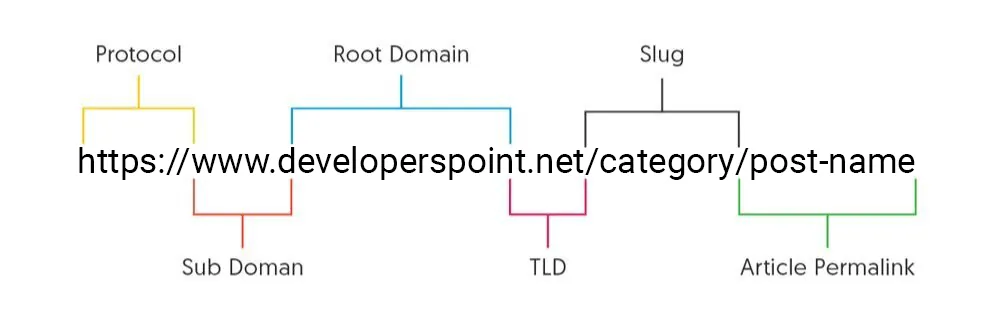
Your URLs must be clean, pertinent and easy to read or remember. For instance, rather than using a general address such as https://developerspoint.net/page1?id=123, your link should be https://developerspoint.net/how-to-improve-on-page-seo for the most detailed guide on on-page SEO. This in turn make life easier to the search engines as they know what particular page you are looking for as well as friendly to the users.
Header Tags and Content Hierarchy
Header Tags and Content Hierarchy: Stating the website’s intent for both the search engines and the end-users
You can use header tags to structure a particular piece of text: H1, H2, and H3. That is what they say to both the search engines and the readers about what each section is about. Here’s how you can use them:
H1: Use this for your main title to optimize your on-site SEO strategy. It’s usually the most important heading.
H2: Use these for section titles (e.g., “How to Improve On Page SEO” and maximize your chances of appearing in a featured snippet).
H3: Use these for subsections (e.g., “Keyword Research Tips”).
Using these tags properly helps Google understand the structure of your content and improves your rankings.
User Experience (UX) Optimization
Strategies to Improve User Engagement and Dwell Time
When the visitor arrives at your site, you do not want him/her to move away easily. The longer users stay on the site, the higher is the possibility that their session will be considered as relevant for SEO. Below are some methods that will help you to have a better site speed, which can be a factor that makes your site to be ranked well in the search engines. Dwell time is an important ranking factor that affects your website’s visibility. (how long someone stays on your site):
Make sure your content answers their question right away by incorporating on-page SEO elements that align with user intent.
Use clear navigation so visitors can easily find what they’re looking for.
Keep your content engaging and relevant.
Even Lowering Your Bounce Rate with Intelligent On-Page Strategies
Basically a bounce rate is when a person comes to your website and then a few seconds later the exits. Having a high bounce rate is actually damaging to your site ranking. In general to minimize bounce rates do not let the page take a long time to load it must be easy on the eyes and contain what people are looking for.
Mobile Web Optimisation – A Simple Checklist
Increasing number of clients are now using their phones to surf the internet. The design of your site needs to be professional or at least pretty, and it has to be fully usable and optimized for smartphones. There are tools such as media queries where you are able to build a webpage and it will automatically adapt to any form of device.
Another study discusses such aspects of web optimization as Page Performance and Page Speed Optimization.
Speed Optimization Techniques: Lazy Loading, Compression is the fourth step to improving your website for improved loading time as well as improved ranking factors., Caching
According to the survey, the most crucial factor focused on by SEO is website speed. There is a belief that faster loading websites rank higher in a search engine. Here’s how you can make your website load faster:
Lazy Loading: That means the images and videos uploaded in websites will only appear once when the visitor scrolls down to them making the loading time of the page faster.
Compression: This makes the size of your files smaller (such as images) hence they are loaded faster..
CachingThis stores certain parts of your website on visitors’ browsers, improving site speed so they don’t have to reload everything every time they visit.
Mobile Optimization Best Practices for Advance On Page SEO
Google now uses mobile-first indexing, meaning it looks at your mobile site first when ranking it. Make sure your site is mobile-friendly by using responsive design, ensuring buttons are easy to click, and making text readable on smaller screens, as these are crucial on-page SEO elements.
Internal Linking and Site Structure
Internal Linking and Navigation and its Significance On Page SEO
Internal links refer to links that take a user from one web page on your internet site to another. They assist search engines identify how your pages are interconnected and thus assist your users to move around your site. For instance, if you have written a blog post on ‘on page SEO,’ and you have another on ‘keyword research’ you can link the two to provide additional information.
How to Design Site Architecture for Better SEO
There are still others that seem otherwise confusing to both the users and the search engines, therefore your website should have an easy to follow structure. Organize related content together and link out to other source as well to help with site credibility and structure.
FAQs about On Page SEO
What is on-page SEO?
On-page SEO can therefore be described simply as all the measures and approaches you can apply to the website to enhance its ranking. The steps involve proper content, appropriate keyword usage, and ease of navigation and read all correspondingly reflect the above vary.
How long does it take to experience the benefits of on-page SEO?
Enhancing on page SEO optimization is a task that may bring results in few weeks or sometimes in few months depending with the level of competition in the industry. Nonetheless, if you devote adequate time to on page SEO optimization besides following off page SEO steps with an SEO cheque tool, you are likely to find an incremental increase in traffic and ranking.
Is on-page SEO and technical SEO achievable by myself?
Yes, you can! In fact, a number of on page SEO activities can and should be performed by yourself, for instance, making adjustments to your content, addressing your website speed, and using the right keywords. If you are not too sure on how to proceed, it is very easy to find free tools and guides on the internet for SEO checker resources.
What is the right approach for keyword selection for any website?
To begin with it is worthwhile to recall what person is going to search for. Some free and effective keyword research tools that can be utilized now are Google Keyword Planner and Ubersuggest Consider using the available online keyword tools to search for keywords related to your topic and improve your page ranking. It is recommended to select keywords that are relevant and timely, as well as those which your business is not going to compete with too many other websites for and which connect to the user intent.
What are meta descriptions and title tags?
Meta tags are strings containing short descriptions about your webpage to be used by the search engine. The two most crucial meta tags are the title tag and meta description which appear in the result pages. These tags are useful when informing the search engines what your page is all about and may force users to follow your link..
How can I make my website load faster?
To make your website load faster, you can use compression techniques that positively impact user experience and search intent. lazy loading for images, compress your image files, and implement caching to store data for faster future visits. You can also test your website’s speed using tools like Google PageSpeed Insights is a valuable tool for improving your site’s performance in Google search